March 05, 2026
Is IPTV Legal? Everything You Need to Know in 2026
Is IPTV legal? Learn the difference between legal and illegal IPTV services, what the law says in the US, UK, and Europe, and how to stream safely in 2026.
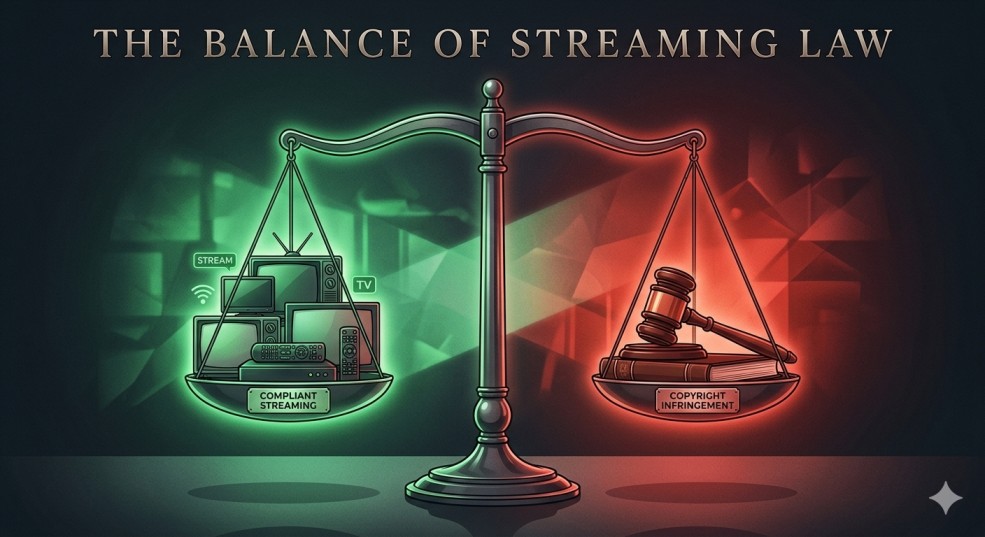
One of the most common questions people ask about IPTV is: "Is IPTV legal?" The short answer is: it depends entirely on the service you use. IPTV as a technology is completely legal. The legality depends on whether the provider has the rights to the content they stream. This guide explains everything clearly.
IPTV Technology is Legal
IPTV (Internet Protocol Television) itself is 100% legal. Major companies like YouTube TV, Hulu Live, Sling TV, and DirecTV Stream are all IPTV services — they deliver television over the internet, and they're perfectly legal because they pay for broadcasting rights.
The question of legality applies not to IPTV as a technology, but to specific IPTV services — specifically, whether they have obtained the proper licenses to broadcast the content they offer.
Legal IPTV Services — What Makes Them Legal?
A legal IPTV service:
- Has entered into content licensing agreements with broadcasters and studios
- Pays royalties and fees to content owners
- Has a clear legal entity, registered business, and terms of service
- Complies with regional content restrictions (geo-blocking)
Examples of fully legal IPTV services include:
- YouTube TV — $73/month, US only
- Hulu + Live TV — $76/month, US only
- Sling TV — $40/month, US only
- Sky Glass / NOW TV — UK
- Various regional telecom IPTV offerings from providers like Orange, Bouygues, and BT
What Makes an IPTV Service Illegal?
An IPTV service becomes illegal when it streams copyrighted content without paying for the rights to do so. These are often called "pirate IPTV" services, and they typically:
- Offer a huge number of channels at extremely low prices ($5–$10/month for thousands of channels)
- Have no registered business address or verifiable company information
- Operate from countries with weak intellectual property enforcement
- Frequently go offline or change their domain to avoid legal action
Using an illegal IPTV service means you're accessing content that has been pirated — the content owners haven't been compensated.
Risks of Using Illegal IPTV Services
While laws vary by country, using illegal IPTV services carries real risks:
- Legal consequences: In the UK, EU, and US, ISPs are increasingly monitoring and blocking illegal IPTV streams. In serious cases, users have been fined
- Security risks: Many illegal IPTV apps contain malware, spyware, or data-harvesting code
- Service instability: Illegal services are shut down regularly, leaving subscribers stranded mid-subscription
- No consumer protection: If the service disappears with your money, there's no recourse
The Legal Situation by Country
United States
The Digital Millennium Copyright Act (DMCA) makes unauthorized streaming of copyrighted content illegal. The Federal Government has prosecuted several illegal IPTV operators. As a viewer, civil liability is less commonly pursued, but ISPs can issue warnings and throttle connections.
United Kingdom
The UK has one of the most aggressive approaches to IPTV piracy in Europe. The Digital Economy Act 2017 makes using illegal streaming services a civil offense. The Premier League actively pursues illegal IPTV streams and has won court orders forcing ISPs to block pirate services in real time during live matches.
European Union
EU member states have varying levels of enforcement, but a 2017 EU Court of Justice ruling confirmed that knowingly watching illegal streams can be a copyright infringement. Germany, France, and Italy have the strictest enforcement within the EU.
Other Countries
In many countries outside the US, UK, and EU, IPTV piracy laws exist but enforcement against individual viewers is rare. However, the services themselves are increasingly targeted.
How to Make Sure Your IPTV Service is Legal
Here's how to verify whether an IPTV service operates legitimately:
- Check for a registered business: Does the company have a real address, registered business information, and clear contact details?
- Read the terms of service: Legitimate services have detailed terms that reference their licensing agreements
- Look at the pricing: If a service offers 50,000 channels for $5/month, it almost certainly hasn't paid for the rights to all that content
- Check for payment security: Legal services use recognized payment processors (Visa, Mastercard, PayPal) — not just cryptocurrency
- Customer support: Legitimate businesses have professional, responsive support teams
Frequently Asked Questions
Is watching IPTV illegal?
Watching IPTV from a legal provider that has obtained proper broadcasting rights is completely legal. Watching IPTV from a pirate service that hasn't paid for the rights may constitute copyright infringement depending on your country's laws.
Can my ISP see that I'm using IPTV?
Your ISP can see that you're streaming video data, though they can't easily distinguish between legal and illegal streams. If you're using a legal IPTV service, there's nothing to be concerned about.
Is a free IPTV service legal?
Truly free, fully legal IPTV services are extremely rare because content licensing is expensive. Free services are almost always funded by advertising (legal, like Pluto TV) or are pirate services that simply don't pay for rights.
Stream with confidence.
Stream4k is a registered IPTV service with clear terms, professional customer support, and transparent pricing. No hidden risks, no sudden shutdowns.
Get Started with Stream4k →
Ready to start streaming?
45,000+ channels, 4K quality, all devices. Try free for 24 hours.
Get Started — From $12/mo